AI News in Filmmaking
Neill Blomkamp, who directed District 9, Elysium, and Gran Turismo has created a 13-minute science-fiction horror film using AI-generated video.
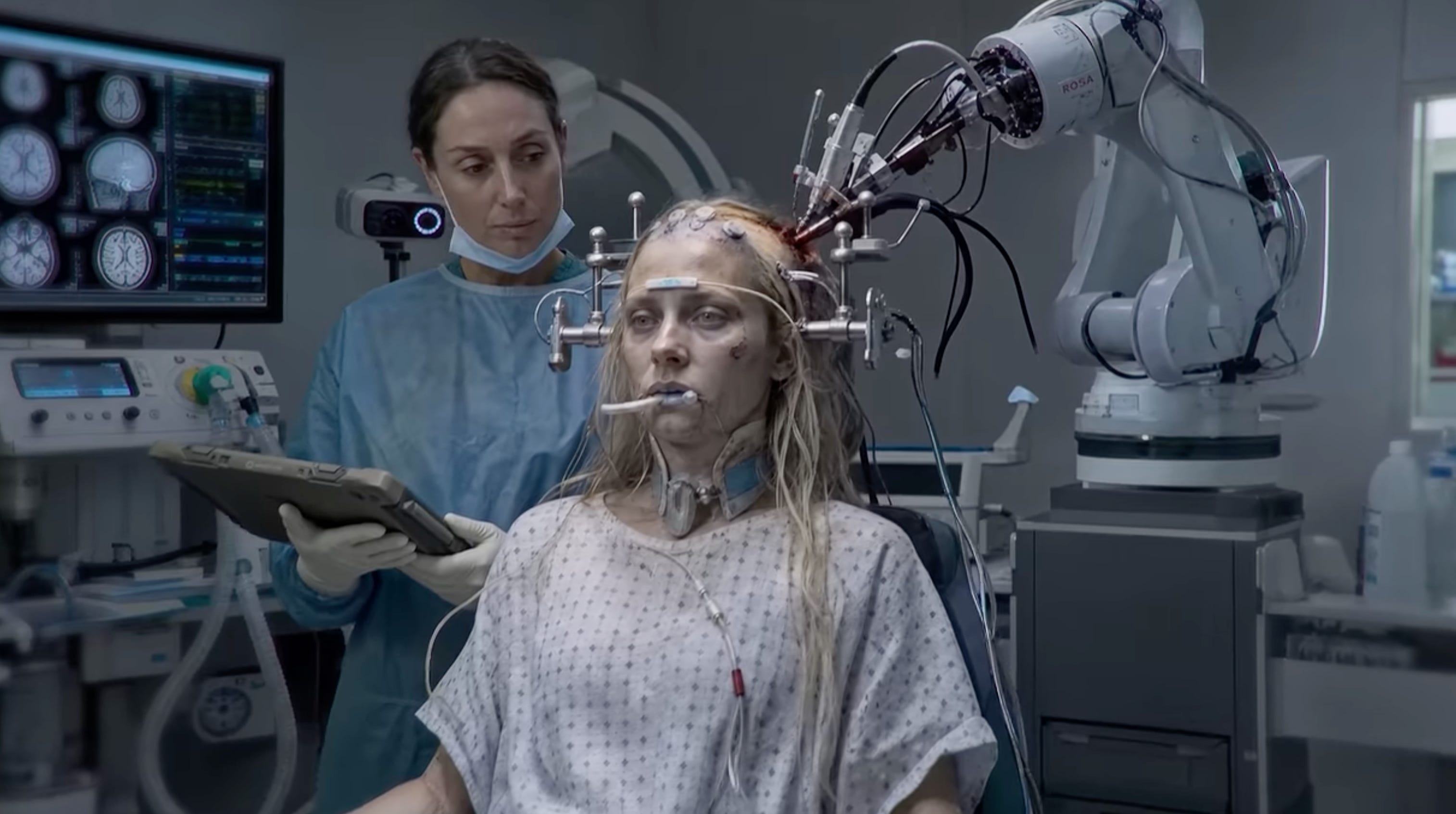
Just mentioning this was enough to spark the usual debate.
Some people see this as the future of filmmaking, while others see it as the end. NIGHTBORNE sits in the middle, giving us a real film to examine instead of more promises, demo clips, or people shouting “game changer” on their phones.
Blomkamp calls NIGHTBORNE his first “full test AI film.” He says every shot was created with ByteDance’s Seedance 2.0 and directed one prompt at a time. The film uses concept art from human artists and features the faces and voices of 32 real people, all photographed and recorded with their permission. Blomkamp has also started Barley Studios and plans to try making a feature film in this style. You can watch NIGHTBORNE and read his announcement.
This project deserves serious attention and honest discussion.
Describing NIGHTBORNE as “fully AI” might work for marketing, but it does not reflect the reality of production. While the images were generated by AI, people still came up with the ideas, directed, designed, performed, selected, edited, and completed the film.
The machine created the footage, but people made the film.
This difference is important for filmmakers who want to learn from the project.
What NIGHTBORNE actually proves
Most AI videos offer a single impressive moment, like a creature turning its head, a camera moving through a ruined city, or someone walking toward us while the background falls apart.
NIGHTBORNE tries something more difficult by maintaining a believable world for 13 minutes.
The film tells the story of a U.S. Army pilot who is declared dead as a secret program turns wounded soldiers into remote-controlled weapons. The story is told through interviews, recovered recordings, surveillance images, and military footage. The setting is based on Peter Watts’ novel Echopraxia.
Visually, the film features many of Blomkamp’s usual themes: military hardware, secret institutions, body horror, a documentary feel, and technology in the hands of people who probably should not be trusted with it.
The achievement is not that every shot is flawless. It is that they generally feel as if they belong to the same project. An experienced director created enough usable material for an editor to construct a coherent short film.
That is a meaningful step beyond “look what the model made.”
It does not prove what some headlines suggest.
The format is doing a lot of the work
Blomkamp chose the mock-documentary form well. He used similar visual grammar in Alive in Joburg and District 9, and it fits the strengths and weaknesses of current AI video almost perfectly.
An archival documentary can cut between cameras, locations, formats, and time periods without feeling broken. Surveillance footage can look ugly. Recovered recordings can stutter or end before the action becomes difficult to maintain. Changes in texture or lighting can be understood as differences between fictional sources.
Discontinuity can seem intentional in this format.
This is not cheating; it is a directing choice.
Filmmakers have always picked styles that fit their limits. Low-budget horror hides what it cannot show. Found-footage films use rough images as part of their perspective. A smart director does not set up a tool to fail in the most costly way.
Still, this choice reveals something important. NIGHTBORNE rarely needs to show two actors playing a traditional scene with matching shots, changing eyelines, careful movement, building emotion, and repeatable performances.
That is the point where making a convincing image turns into real filmmaking.
A shot is not a scene
ByteDance says Seedance 2.0 can generate 15-second, multi-shot audiovisual clips using text, images, audio, and video as references. It also claims improved control, editing, subject consistency, camera planning, and synchronized sound. Read ByteDance’s technical overview of Seedance 2.0.
ByteDance’s own evaluation says the model still needs improvement in detail stability, dynamic vitality, multi-subject consistency, text rendering, complex editing, and occasional audio distortion.
These are not small details for filmmakers.
Detail stability is continuity. Multi-subject consistency affects staging and performance. Complex editing is revision. Dynamic vitality keeps a human face from looking like it is waiting for the prompt to end.
Critics and viewers have pointed to gibberish signs, changing injuries, strange background movement, possible character duplication, unnatural line readings, and emotional reactions that do not quite connect. The Verge’s review was bluntly negative. GamesRadar’s coverage collected similar complaints about continuity and performance.
Some of those flaws will fade as the models improve. But filmmaking is not simply a race toward cleaner pixels.
An actor listens, adjusts, withholds, reveals, and affects the other person in the scene. A director may discover that the written intention was wrong. An editor may need the glance before the line, three more frames of hesitation, or a different emotional temperature.
The real test is not just if AI can make someone look scared. It is whether a filmmaker can guide and adjust that fear with enough detail to create a full performance in a scene.
The missing production report
There is another reason to be cautious about saying the feature-film problem is solved.
We do not have the production report.
The announcement tells us the system, film length, involvement of concept artists, and licensing of faces and voices. It does not give us the budget, production time, number of attempts, rejection rate, complete team size, or conventional sound and postproduction work involved.
We also do not know how well the pipeline handles a precise note.
Can the filmmaker change only the performance? Move a prop without altering the face? Adjust a reaction without rebuilding the surrounding footage? Can an approved character, costume, and location survive dozens of revisions across a feature?
Generation gets the attention. Revision determines whether the workflow survives production.
Without those answers, nobody outside the project can say this method was faster, cheaper, or ready to scale. It may be all three. It may also involve thousands of failed generations and a patient editor digging through the wreckage. We do not know.
This does not take away from the experiment. Instead, it points to the next questions we need to ask.
“Fully AI” leaves out the people
The most responsible aspect of the project might be getting the least attention.
The production says it used 32 real people with likeness agreements and hired human concept artists. This is better than treating consent as something to worry about after the fact.
But an agreement is just the start. Filmmakers need to know what was allowed, how long permission lasts, if a likeness can be reused or changed, how payment works, and what happens if the material is used in another project or model.
Credit, consent, and compensation all matter. Honest language about the work matters too.
If a director, producers, performers, concept artists, an editor, and other postproduction staff all contributed to the final film, calling it “fully AI” can make their work invisible in the marketing.
A more accurate way to describe it is as an AI-generated film made through a human-led production process.
It may not sound as exciting, but it is more honest.
The filmmaking problem remains
NIGHTBORNE should not be dismissed just because it used AI. Calling it “slop” is easy, but it does not help us learn anything.
It also should not be seen as proof that actors, crews, or traditional filmmaking are no longer needed. The short film avoids some of the toughest challenges of ongoing drama and depends on human judgment at almost every stage where footage becomes a finished film.
What it shows is more limited, but also more useful.
AI video can now give an experienced filmmaker enough material to create a solid short film in a controlled style. A director can use the limits of the format as part of the storytelling. Human artists and licensed participants can be included instead of being left out.
That is real progress.
What is left is the hard part: performances that grow, settings that stay consistent, continuity that holds up under close review, and the ability to make changes without disrupting everything else.
AI can now create a convincing shot.
The bigger question is whether it can handle the next shot, the actor’s next choice, the editor’s next suggestion, and keep the audience engaged for the next thirteen minutes.
That is where real filmmaking begins.
Rob Tuscani is the founder of CineSight, a platform that explores how AI is changing films, filmmaking, filmmakers, and film education.
How I made this
I decided on the editorial direction, chose the main argument, and made the final decisions. AI tools helped with organizing research, drafting, comparing, checking links, and editing. I checked the main facts against the linked sources and take responsibility for the finished article.
Watch the film here: