CINESIGHT BRIEFS · ISSUE 004
We’re not here to push AI on you. There is enough of that elsewhere. We’re here to show you how it’s being used in film and broadcast, and what that means for you.
A recurring problem with writing about artificial intelligence is this:
Half the stories sound made up.
The other half may have been made up by artificial intelligence.
That’s why CineSight Briefs has linked readers to the reporting, documents and public records behind its stories from the beginning. This issue is no exception.
The employment figures come from the Bureau of Labor Statistics. The explosion findings come from a federal investigation. The digital-replica requirements come from SAG-AFTRA. The festival rules come directly from the festivals.
You’re not expected to take our word for any of it. The links are right here.
Because we’re not making this shit up.
Unfortunately.
In This Issue
Hollywood creatives are being paid to train AI in real production work.
Billy Joel and Val Kilmer demonstrate why consent matters more than the technology alone.
A 3M expert witness used ChatGPT to build his supposedly independent report.
Film festivals still need to tell filmmakers what the hell their AI rules actually are.
◆ ◆ ◆
Hollywood Is Paying Creatives to Train AI to Do Their JobsFor the last few years, most of the attention around AI filmmaking has gone to the same place.
Look what it generated.
A spaceship. A monster. A beautiful woman walking through neon rain. A tracking shot that would have cost $50,000 and three days to shoot.
Some of it is impressive.
Some of it looks like expensive screensaver material.
But something more consequential is happening behind those images.
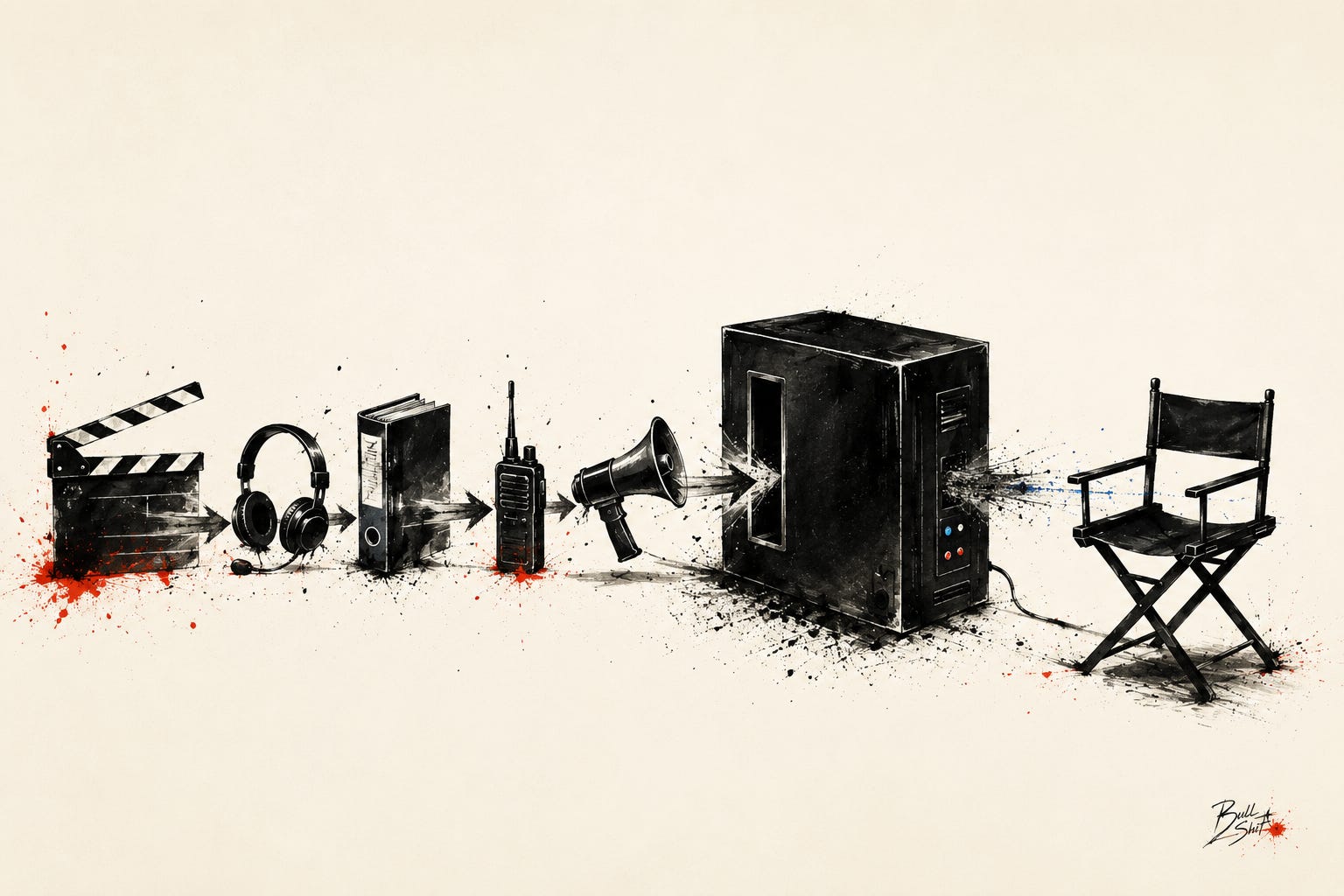
Experienced writers, directors and producers are being paid to teach AI systems how film and television production actually works.
According to an August 22 investigation by The Guardian, entertainment professionals are taking temporary AI-training jobs paying about $12 to $200 an hour.
Companies such as Mercor, Micro1, and Handshake are offering the work. Some of these training companies have contracts with major AI developers, including OpenAI and Anthropic.
And the assignments aren’t hypothetical bullshit about “unlocking creativity.”
They are real production problems.
One producer was asked to teach an AI system how to build a detailed schedule for a two-day shoot. That included permits, location hazards, daylight conditions, personnel requirements and protections for child performers.
Other assignments have involved pitch decks, budget reconciliation, schedule changes, vendor coordination and separating overlapping voices in difficult production audio.
Anybody who has ever built a real shooting schedule knows it is less a document than an argument with reality.
The sun doesn’t care what the producer promised. The company move will take longer than expected. The child actor has to leave. Somebody forgot to account for the train that passes the location every 20 minutes.
Those aren’t glamorous filmmaking secrets. They are the practical decisions that keep a production from driving into a ditch.
People learn that stuff by doing the work, watching other people do it and occasionally screwing it up.
Now that experience is being converted into training data.
The timing makes this especially uncomfortable.
Permitted Los Angeles shoot days fell approximately 48 percent between 2021 and 2025, according to FilmLA data cited by The Guardian. National employment in the motion-picture and sound-recording industries fell from approximately 450,000 jobs in July 2022 to 326,000 in May 2026, a decline of about 28 percent.
You can check those numbers against the underlying Bureau of Labor Statistics employment series.
So the industry loses jobs. Experienced people need money. Some of the money now available comes from teaching machines portions of the work those same people are no longer being hired to perform.
That doesn’t mean an AI system can suddenly replace a good production manager, producer or director. It still takes an experienced person to recognize when the machine has produced a schedule that looks beautiful but will fall apart before lunch.
Still, something important is being transferred.
Not just scripts and images. The industry’s working knowledge.
I don’t blame someone for accepting the work. People have mortgages, groceries, and families. Principles are a hell of a lot easier to defend after the electric bill is paid.
But we should be honest about what is happening.
Decades of professional experience are being packaged into systems that may eventually reduce the need to hire the people who supplied it.
Who owns that knowledge once it has been handed over?
More importantly, who benefits from it?
Check the sources: The Guardian investigation · FilmLA’s 2025 production report · Bureau of Labor Statistics employment data
◆ ◆ ◆
A Young Billy Joel. A Resurrected Val Kilmer. Who Said Yes?Two new films use artificial intelligence to recreate recognizable performers.
I don’t think they are the same ethical situation, and pretending they are doesn’t help anyone understand what is actually happening.
Billy Joel at 22
A 20-minute documentary titled 1971: Billy Joel’s Lost Interview combines genuine audio from a 1971 radio interview with an AI-generated recreation of 22-year-old Billy Joel.
The film is scheduled to premiere September 25 at the Long Island Music & Entertainment Hall of Fame Music Documentary Film Festival.
According to People, Billy Joel was not involved in the production.
Director Adam Ripp is also connected to a separate unauthorized Billy Joel biopic titled Billy & Me. Joel’s representatives have strongly opposed that project, saying its filmmakers do not possess his life rights or access to the required music rights.
That distinction matters.
We know Joel didn’t participate in the AI documentary. We also know his representatives objected to a separate production involving some of the same filmmakers.
We do not currently have a public statement from Joel specifically rejecting 1971: Billy Joel’s Lost Interview.
What we do have is an AI-generated young Billy Joel appearing in a documentary that Billy Joel didn’t help make.
That seems worth talking about.
Val Kilmer After Death
Val Kilmer had originally agreed to play Father Fintan in As Deep as the Grave. Throat cancer complications prevented him from performing the role.
After Kilmer’s death, the filmmakers used generative AI to create the performance.
The production says it worked with Kilmer’s estate and his daughter, Mercedes Kilmer. Kilmer had reportedly felt a personal connection to the character and the American Southwest.
SAG-AFTRA says its applicable collective-bargaining agreement and state law require permission from a deceased performer’s estate before a digital replica can be used in a motion picture. The union says it understands that the Kilmer family’s consent was obtained.
That makes this considerably more defensible than simply grabbing a dead actor’s face and hoping the lawyers arrive after the premiere.
But there is still a question.
Kilmer agreed to play the role. His estate later approved the digital recreation. Those two facts do not necessarily prove that Kilmer personally authorized an AI-generated performance after his death.
Maybe he would have loved it.
Maybe he would have hated the final result.
We don’t know.
Estate approval matters legally and ethically. Whether it completely replaces the performer’s own artistic consent is something the industry still hasn't sorted out.
Read the Reuters report and SAG-AFTRA’s statement.
The Difference Is Consent
“Was AI used?” doesn’t tell us enough anymore.
One production digitally recreates a living artist who had no involvement in the film. The other has the cooperation of a deceased performer’s family and estate after that performer had already accepted the role.
The software doesn’t understand the difference.
We have to.
Any responsible digital-likeness agreement should establish exactly what was authorized, who approves the final performance and whether the replica can be used again.
It should also answer the most basic question of all:
Does the audience deserve to know that the person they are watching never actually gave that performance?
The ethical question isn’t simply whether the recreation looks convincing.
A convincing unauthorized performance may be worse.
Check the sources: People on the Billy Joel documentary · Reuters on the Val Kilmer production · SAG-AFTRA’s digital-replica statement · Associated Press coverage
◆ ◆ ◆
This one is almost too perfectly on the nose.
An expert witness hired by 3M was supposed to evaluate the company’s responsibility for a fatal industrial explosion.
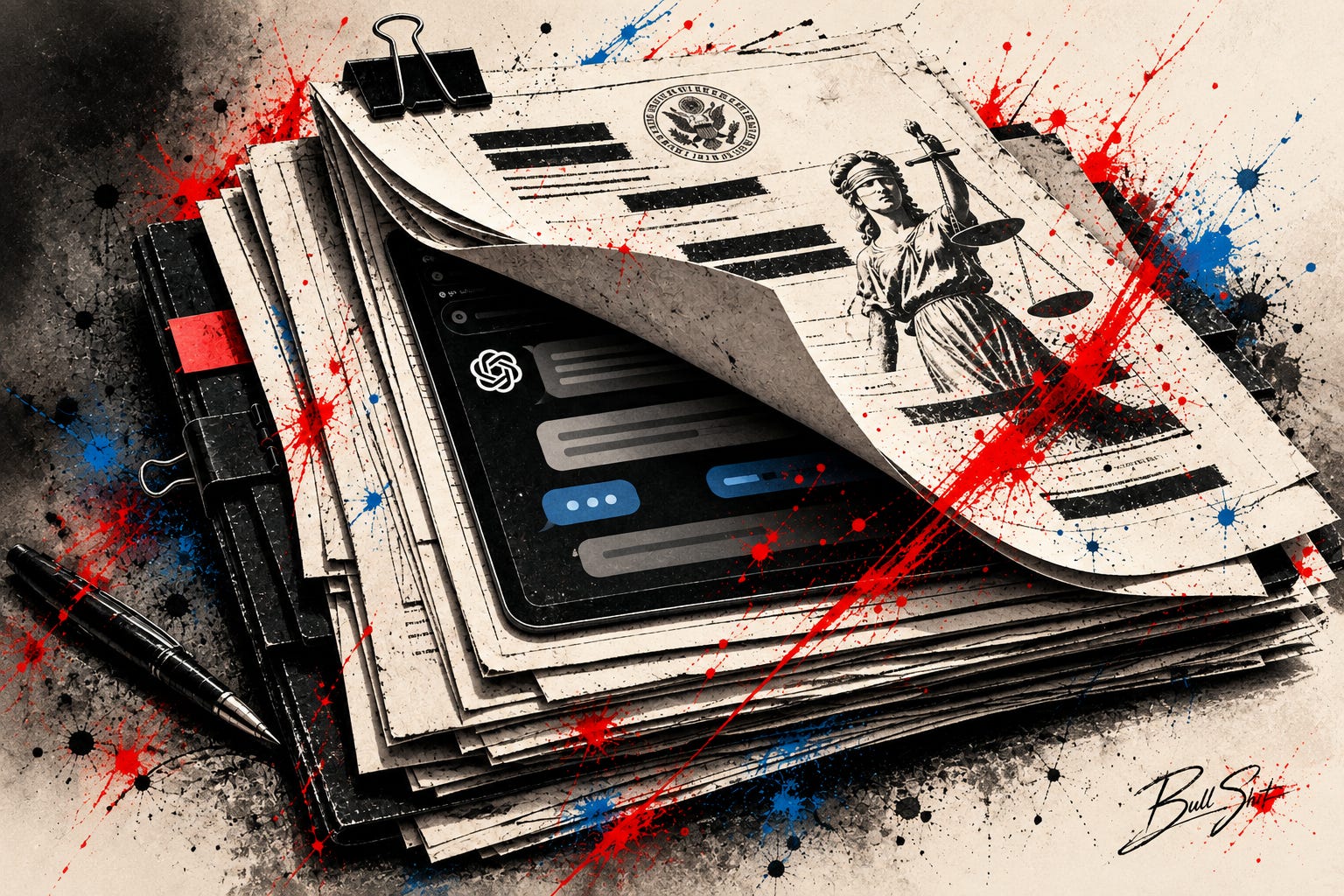
His ChatGPT conversations showed him asking the machine to help build a report defending 3M and showing that the company was “0% at fault.”
Then approximately 350 pages of those conversations appeared in court.
The case concerns the January 2020 explosion at Watson Grinding in Houston. Two workers and a nearby resident were killed. Hundreds of surrounding homes were damaged.
The U.S. Chemical Safety Board determined that a degraded and poorly crimped hose disconnected and released propylene inside the facility.
A manual shutoff valve had not been closed. The gas-detection alarm, exhaust-fan startup and automatic gas-shutoff system were inoperative.
The CSB established what physically went wrong at Watson Grinding. It did not decide 3M’s civil liability.
That question went to court.
Josh Autenrieth of KnightHawk Engineering was hired as an expert witness for 3M. During discovery, opposing counsel obtained approximately 350 pages of his ChatGPT activity.
At trial, Autenrieth acknowledged that approximately 85 to 90 percent of the submitted report came from ChatGPT.
A Harris County jury later awarded $61.5 million to 24 plaintiffs and assigned 30 percent of the responsibility to 3M. The remainder was assigned to Watson Grinding. 3M disputes the verdict and says it plans to appeal.
To be clear, the ChatGPT conversations alone did not determine the verdict. The jury heard weeks of evidence about the explosion and the gas-detection system.
But the irony is hard to escape.
The expert asked ChatGPT to show that 3M was zero percent responsible.
The jury arrived at 30 percent.
The real problem wasn’t simply that an expert used ChatGPT.
I can imagine perfectly reasonable uses. Organizing documents. Testing an explanation. Looking for inconsistencies. Improving the readability of a report written by an actual expert.
What happened here appears to have begun with the desired conclusion.
That isn’t independent analysis.
That is building an argument backward.
And it applies to creative work more than some people may want to admit.
A script consultant can ask AI to justify an opinion formed before reading the entire script. A producer can use it to manufacture reasons for rejecting a project. A professor can ask it to identify violations and then accept the answer without properly evaluating the student’s work.
The machine will usually cooperate. It has no professional reputation to protect and no uncomfortable feeling in the pit of its stomach when something isn’t right.
Humans are supposed to supply that part.
AI can assist professional judgment. It shouldn’t quietly become the judgment while somebody else signs the report and sends the invoice.
And if that work ever ends up in court, the prompts may not stay private.
AI leaves receipts.
Check the sources: 404 Media’s original investigation · Above the Law on the trial testimony · Houston Chronicle verdict report · U.S. Chemical Safety Board summary · Full CSB investigation report
◆ ◆ ◆
Film Festivals: Tell Us the Rules Before Taking Our MoneyFilm festivals don’t need to agree on one universal AI policy.
They do need to tell filmmakers what the rules are.
A festival can accept generative AI. It can prohibit it. It can create a separate category and hand out a gold-plated robot head for all I care.
Just tell us before collecting the entry fee.
Some festivals are already doing this properly.
The Seattle AI Film Festival requires filmmakers to identify the tools used, provide a general explanation of AI’s role and disclose relevant licensing information.
It specifically says filmmakers do not need to hand over prompts, proprietary techniques, internal pipeline documents or developer-level details.
Its stated goal is transparency, not intrusion.
Read the Seattle AI Film Festival rules.
Rock City Film Festival takes a very different position, but at least its position is clear.
It prohibits generative AI in writing, scripts, music, images, special effects and footage. It permits assistive processes including noise reduction, audio cleanup, color correction, upscaling, stabilization and rotoscoping.
A filmmaker may hate that rule, but the filmmaker can understand it before paying to submit.
Read the Rock City Film Festival rules.
The Academy is also moving toward disclosure.
For the 99th Academy Awards, the Cinematographers Branch may request information about generative or other AI tools used in the cinematographer’s work. Its rule says the purpose is to encourage transparency and allow the work to be evaluated fairly and in context.
Read the official 99th Academy Awards rules.
The industry doesn’t need every festival to reach the same conclusion. It needs policies that answer a few practical questions.
Does generative AI disqualify the film? Are assistive tools treated differently? Do AI-generated posters count? What must the filmmaker disclose? What happens when someone lies about it?
This shouldn’t require a legal expedition and three emails that nobody answers.
Tell filmmakers the rules.
Then take their money.
Check the sources: Seattle AI Film Festival · Rock City Film Festival · Official 99th Academy Awards rules
◆ ◆ ◆
The Part That Hasn’t ChangedThese stories aren’t warnings against every use of artificial intelligence.
They remind us that human decision still matters.
A scheduling system doesn’t have to explain why it forgot the child performer’s required break.
A digital replica doesn’t care whether the original performer consented.
ChatGPT doesn’t lose its professional reputation when an expert report falls apart in court.
The technology can produce the material. It can’t accept responsibility for what happens next.
That part still belongs to us.
For better or worse.
Usually both.
About Rob Tuscani
Rob Tuscani is a filmmaker, writer, and Professor of Practice who has spent more than three decades teaching film production. He created CineSight to give filmmakers practical advice without the fantasy-Hollywood bullshit. He is the author of Don’t F** Up Your First Film* and The First Film Field Guide.
Have you encountered a film festival with a particularly clear, confusing or completely ridiculous AI policy? Reply or leave a comment. I’d like to see it.
CineSight Briefs follows how artificial intelligence is actually entering filmmaking, production and film education. No breathless tool worship. No automatic panic. Whenever possible, no unsupported bullshit.