IN THIS ISSUE
1. Doug Liman Is Shooting the Actor. AI Is Building the World.
Gal Gadot describes an unusual production process on Bitcoin: photograph the human performance while AI helps construct sets and lighting around it. The technology also led to a six-month contract negotiation over what AI could and could not do to her performance.
2. Critterz Learned a Very Expensive Lesson: Your AI Tool Isn’t Your Movie
An OpenAI-backed animated feature set out to demonstrate a radically compressed AI production pipeline. Then the tool at the center of that pipeline disappeared.
3. LTX-2.5 Is Trying to Solve the Problem AI Video Actually Has
Generating an impressive shot is getting easier. Making the next shot belong with it is another matter.
4. GoPro Just Made a Tiny Cinema Camera. Then Things Got Weird.
A 197-gram interchangeable-lens 8K camera would normally be enough news for one week. Six days later, GoPro announced a merger that could take its imaging technology well beyond cameras.
5. Ridley Scott Still Makes the Movie Before He Makes the Movie
At 88, Scott is still drawing his films scene by scene before he gets to the set. There may be a lesson in there somewhere.
WHAT MAKES A MOVIE?
Most people hear the word movie and think of the finished thing. Something on a theater screen. Something playing on Netflix. A couple of hours of story, actors, sound and pictures. You watch it, you like it or you don’t, and that’s pretty much the transaction.
A dictionary will tell you a movie is simply a motion picture; a film intended for viewing as entertainment or art. Technically correct. But if you’ve ever been part of making one, it’s an incredibly incomplete definition. Behind that finished movie are writers, actors, directors, producers, dozens or sometimes hundreds of crew members, cameras, lenses, lighting, production design, locations, sound, costumes, schedules, money, editing, music, visual effects, software, arguments, more money, accidents, compromises, and thousands upon thousands of decisions made by people trying to create one finished thing.
That’s what struck me about the stories in this issue. One production is photographing actors while AI builds much of the world around them. Another lost the AI platform its pipeline depended upon. A new video model is trying to maintain continuity from one shot to another. GoPro has built a camera small enough to put almost anywhere. And Ridley Scott is still sitting down with a pencil and drawing his movie before he shoots it. Different pieces. Different tools. Different ways of working. All contributing to that thing we rather casually call a movie.
PRODUCTION
Doug Liman Is Shooting the Actor. AI Is Building the World.
The most interesting AI filmmaking story this week isn’t another demonstration reel.
It’s an actual feature.
Gal Gadot recently described her experience shooting Doug Liman’s upcoming Bitcoin, and what interests us isn’t simply that the production uses AI.
It’s which pieces of the movie still need to physically exist when the camera rolls, and which ones apparently don’t.
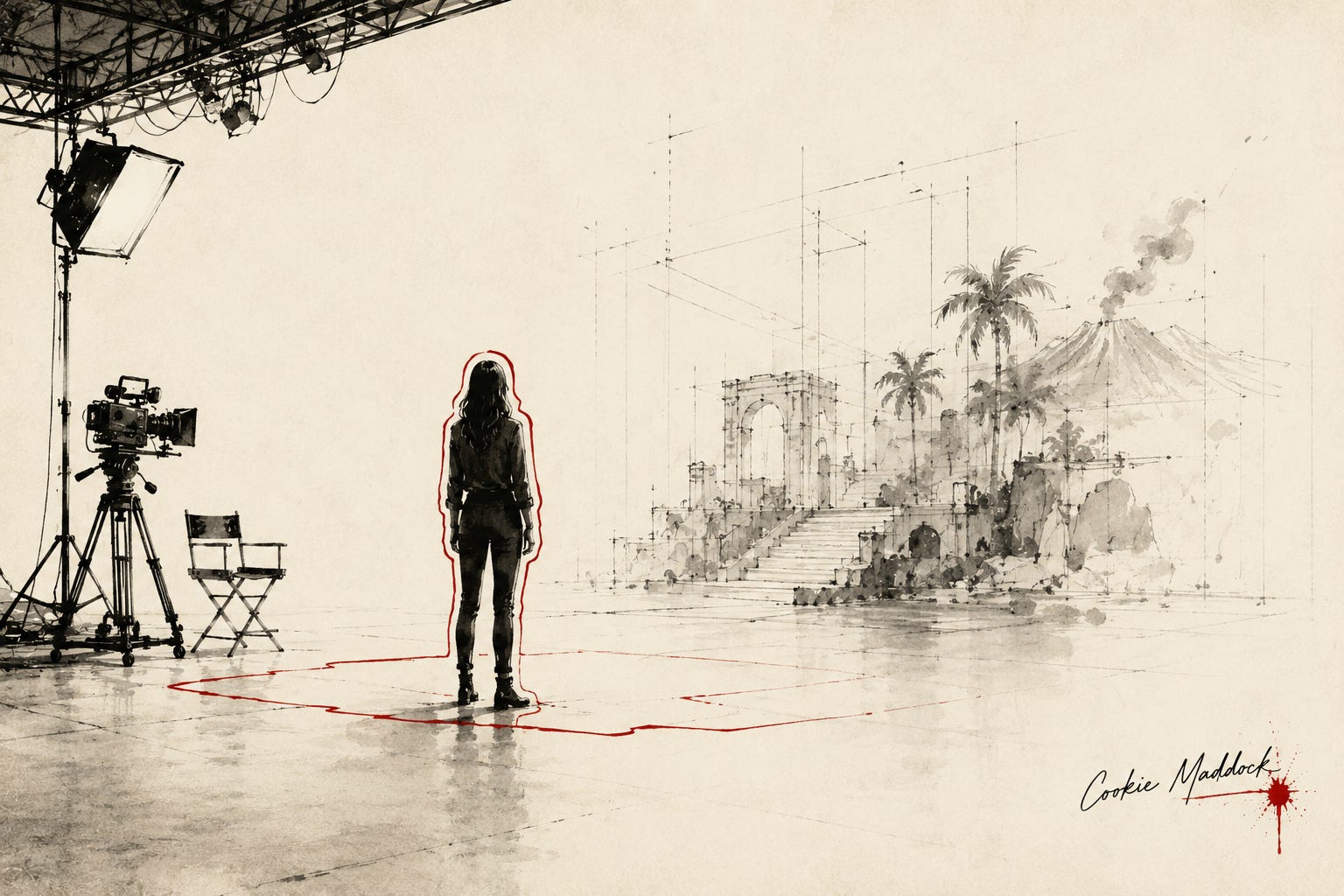
According to Gadot, the actors worked in what Variety describes as a barebones production space while AI is being used for the movie’s sets and lighting.
The actors were photographed.
Much of the world surrounding them will be generated.
And there’s our first answer to what makes a movie?
Apparently, the set doesn’t necessarily have to be a set anymore.
But the performance still matters.
And Gadot wanted to make damn sure it remained hers.
Her contract negotiations reportedly took six months, the longest of her career, because her attorneys attempted to anticipate the ways AI might potentially interact with her performance. Her agreement prohibited AI from altering that performance, and Gadot said SAG contacted her lawyers about the protections they developed.
That makes the contract part of the technological workflow.
AI planning now belongs in preproduction.
Not merely:
Which model are we using?
But:
What exactly is that model allowed to do?
CINESIGHT TAKE
For more than a century, a movie set has meant something relatively concrete: actors standing inside a physical environment while cameras, lights and people surround them.
Bitcoin suggests those pieces can increasingly be separated.
The performer can exist here.
The environment can exist somewhere else, or nowhere at all until later.
But they eventually have to become one movie.
And somewhere in preproduction, filmmakers increasingly need to decide where the human performance ends and the software begins.
SOURCES / READ MORE
Variety — Gal Gadot on Bitcoin, AI sets and lighting
The reporting is based on Gadot’s appearance on Josh Horowitz’s Happy Sad Confused podcast and supports the six-month contract negotiation, AI sets and lighting, and SAG-related details.
Critterz Learned a Very Expensive Lesson: Your AI Tool Isn’t Your Movie
Here’s another piece of our movie.
Infrastructure.
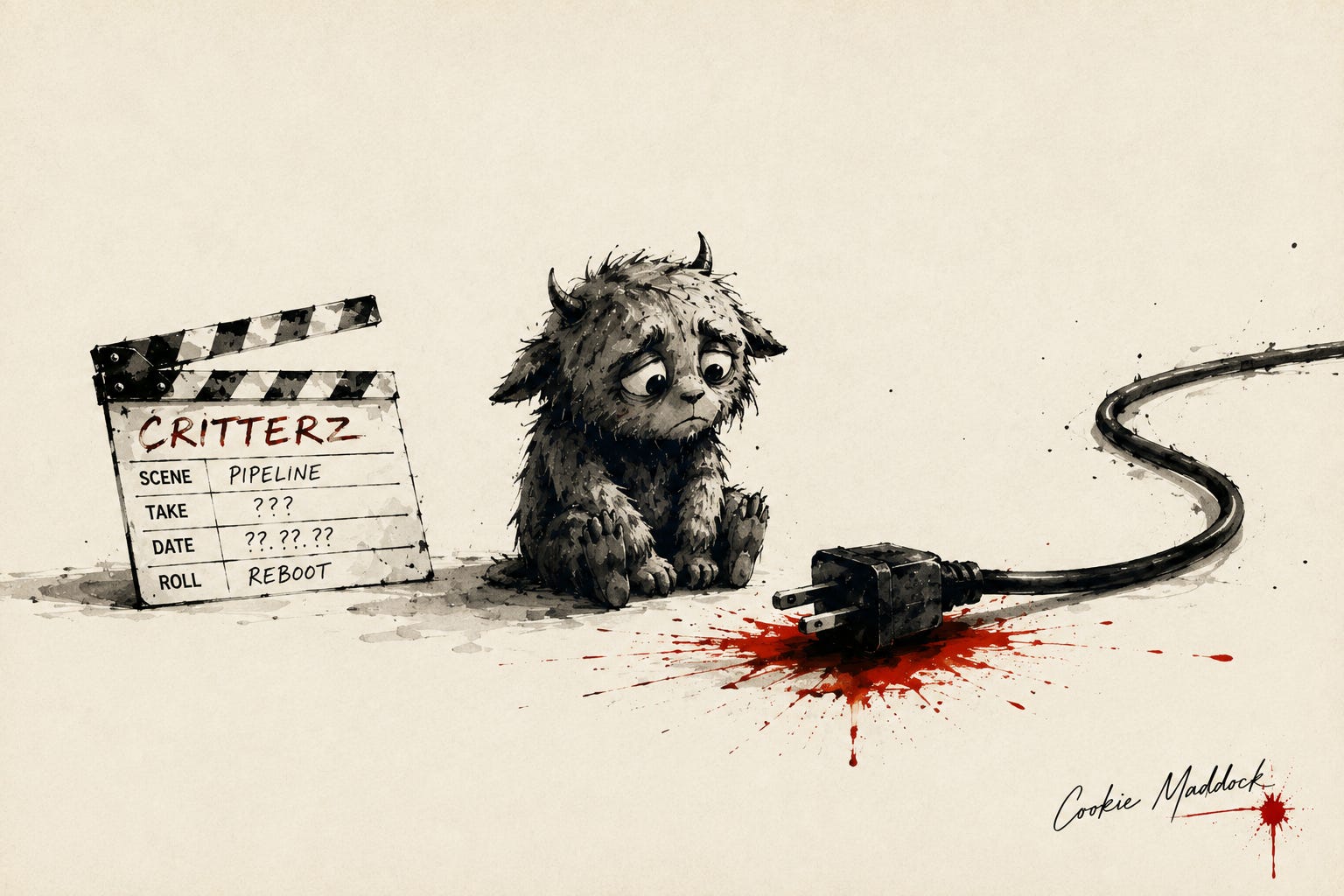
Critterz was conceived as an ambitious experiment in AI-assisted feature animation, intended to demonstrate that generative technology could dramatically compress the traditional animation-production cycle.
Then the infrastructure changed.
OpenAI discontinued the Sora web and app experiences on April 26, 2026. The Sora API is scheduled to disappear September 24.
And Critterz had built a significant part of its production pipeline around Sora.
The filmmakers suddenly had to find another way forward.
That gives us another answer to our question:
The tool isn’t the movie because the movie has to survive the tool.
A camera can be replaced.
Editing software can be replaced.
An AI model can be replaced.
It may be expensive, inconvenient and potentially disastrous, but the finished work is the objective, not loyalty to the machinery used to make it.
CINESIGHT TAKE
If a critical part of your production exists entirely on somebody else’s servers, you don’t completely control that part of your filmmaking infrastructure.
You’re renting it.
And the landlord can remodel the fucking building while you’re still shooting.
For filmmakers planning longer AI-assisted projects, backup workflows and tool portability aren’t merely IT concerns anymore.
They’re preproduction.
SOURCES / READ MORE
Bloomberg — Critterz looks for a new technology partner after OpenAI
The Next Web — Critterz, Cannes and the Sora shutdown
OpenAI — Official Sora discontinuation information
The OpenAI source establishes the shutdown dates. Bloomberg and The Next Web provide the reporting connecting the change in technology to the Critterz production.
AI PRODUCTION
LTX-2.5 Is Trying to Solve the Problem AI Video Actually Has
Now we get down to the movie itself.
A two-hour movie at 24 frames per second contains 172,800 frames.
But nobody experiences a movie as 172,800 photographs.
We experience relationships between them.
A wide shot establishes something.
A medium changes our relationship to it.
A close-up changes it again.
Someone looks offscreen.
We cut.
Someone else is looking back.
Meaning happens between the images.
AI video has become remarkably good at producing individual shots.
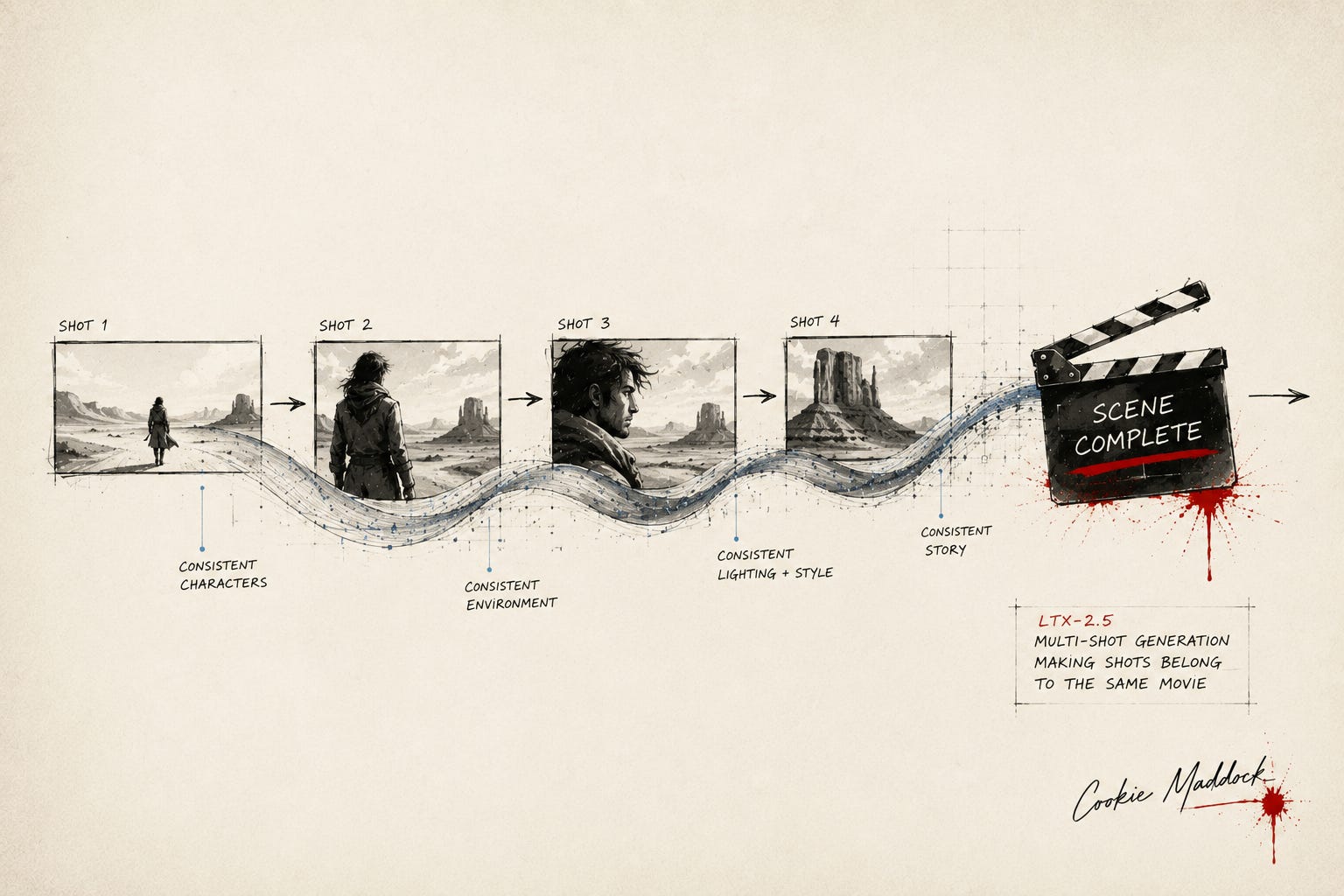
The harder problem is making the next shot belong to the same movie.
That’s what makes LTX-2.5’s native multi-shot generation interesting. Lightricks says the model can generate multiple connected shots while attempting to preserve characters, environment, lighting, voice and visual style across cuts.
The language itself is changing.
Not:
Generate a clip.
But increasingly:
Construct a scene.
CINESIGHT TAKE
For filmmaking, the hard problem was never simply generating a beautiful picture.
It was generating the next picture that belongs with it.
The useful threshold arrives when we can reliably say:
Here’s the scene. Here’s the coverage. Don’t fuck up the continuity.
Because a collection of shots isn’t necessarily a movie.
The relationships between them are what begin turning them into one.
SOURCES / READ MORE
LTX — LTX-2.5 model documentation
LTX — Multi-shot prompting guide
Lightricks — LTX-2.5 model card
These are the primary technical sources for the multi-shot, continuity and model-capability claims.
CAMERA DEPARTMENT
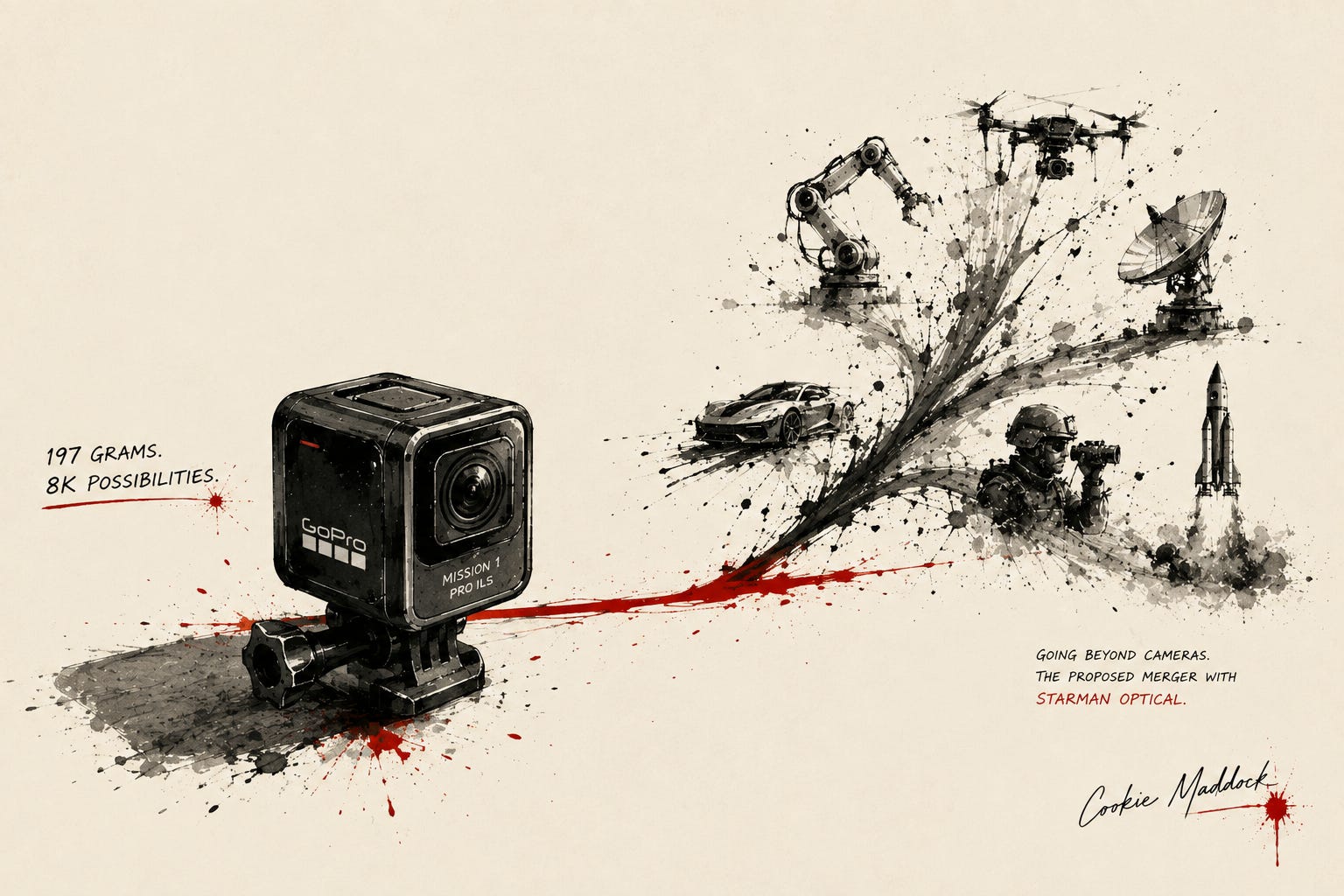
GoPro Just Made a Tiny Cinema Camera. Then Things Got Weird.
And then there’s perhaps the most obvious filmmaking tool of all.
The camera.
On August 26, GoPro announced the MISSION 1 PRO ILS, a 197-gram interchangeable-lens camera with a 50-megapixel 1-inch sensor, 8K60 recording and a Micro Four Thirds mount.
The interesting question isn’t whether it replaces an Alexa.
It doesn’t need to.
The interesting question is:
Where can you put a camera this small that you couldn’t easily put one before?
Inside a car.
Against a windshield.
On a body rig.
Inside a practical location.
On a tiny motion-control platform.
In a crash position.
The camera doesn’t make the movie.
But changing the physical properties of the camera can change which images are practical to make.
Then, six days after announcing it, GoPro announced a proposed merger with Starman Optical, a transaction that could extend the company’s imaging and optical technology into AI infrastructure, robotics, defense and aerospace.
Even the technology developed to make movie images increasingly has a life far beyond movies.
CINESIGHT TAKE
Every generation of filmmakers has had cameras the previous generation couldn’t have imagined.
And every generation promptly sticks them somewhere ridiculous.
That’s progress.
But a smaller camera still doesn’t tell you where it belongs.
That’s a filmmaking decision.
SOURCES / READ MORE
GoPro — Official MISSION 1 PRO ILS announcement and specifications
GoPro — Official Starman Optical merger announcement
Reuters — Independent reporting on the GoPro/Starman transaction
GoPro provides the camera specifications and transaction details. Reuters provides independent reporting on the proposed merger and GoPro’s imaging and optics patent portfolio.
OLD SCHOOL / NEW SCHOOL
Ridley Scott Still Makes the Movie Before He Makes the Movie
Which brings us to perhaps the least technologically impressive tool in Issue 005.
A pencil.
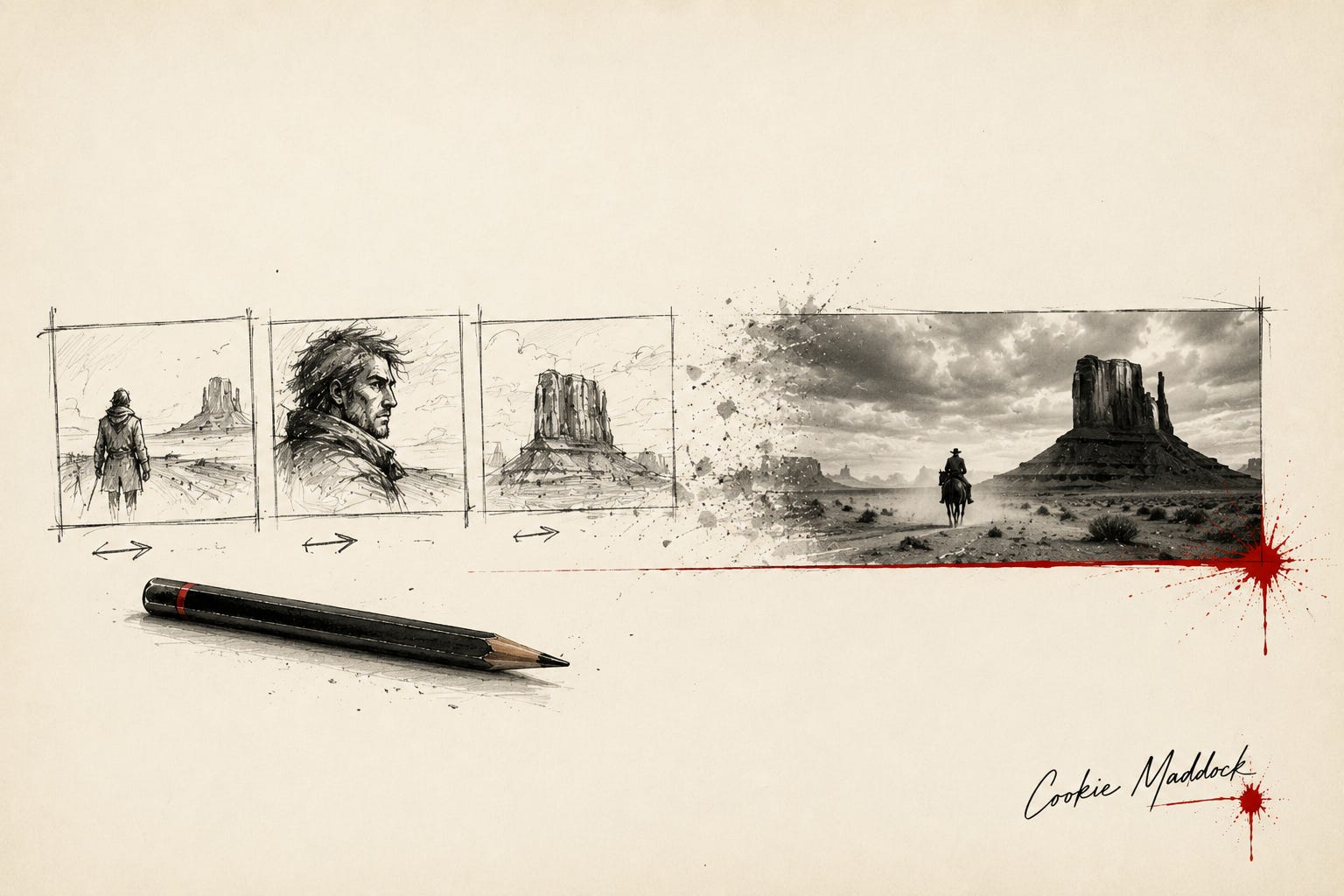
Ridley Scott is 88, and he still draws his movies.
Close-ups.
Medium shots.
Wide shots.
Color.
Sometimes he hasn’t even visited the location yet, so he draws what he imagines it should become.
Scott calls the process:
“filming on paper in my head.”
Think about that alongside everything else in this issue.
Bitcoin is separating the actor from the environment.
Critterz is changing the technology used to build its images.
LTX is trying to understand how one generated shot relates to another.
GoPro is changing where the camera can physically go.
And Scott is solving the movie before any of that machinery matters.
He’s making decisions.
CINESIGHT TAKE
Previsualization isn’t about producing beautiful storyboards.
It’s about making decisions while changing your mind is still cheap.
A pencil can do it.
Storyboard software can do it.
Unreal can do it.
AI can do it.
The tool isn’t the lesson.
Knowing what the hell you’re trying to make is the lesson.
SOURCES / READ MORE
Motion Picture Association / The Credits — Ridley Scott on preparing The Dog Stars
People — Ridley Scott still draws his movies by hand
The MPA interview is the primary source for Scott’s description of his process and the “filming on paper in my head” quotation.
THE BOTTOM LINE
So what makes a movie?
Hell of a question.
It isn’t just the screenplay.
It isn’t the actor.
It isn’t the camera.
It isn’t the set.
It isn’t the edit.
It isn’t the AI model.
It isn’t even the director.
A movie is what eventually emerges when all of those pieces, and a hell of a lot more, are made to work together toward one finished experience.
The stories in this issue aren’t really about five new technologies.
They’re about five pieces of filmmaking moving around.
The set can become software.
The production infrastructure can move into the cloud.
Individual shots can be generated rather than photographed.
The camera can become almost absurdly small.
And a pencil can still be enough to begin constructing the whole damn thing.
Technology will keep changing those pieces.
Some will disappear.
Others will be invented.
Jobs will change.
Workflows will change.
The places where decisions happen will change.
But eventually somebody still has to put all of it together and make the movie.
Maybe that’s why such a simple little word contains so damn much.
— CineSight